Now on the App Store
Roll with intent.
Every dice app hides a rand() call. Quantum Dice Roller makes the randomness
a visible choice: pick where your bits come from, and the app shows you exactly what
produced the roll.
Android soon
An Android version is in development.
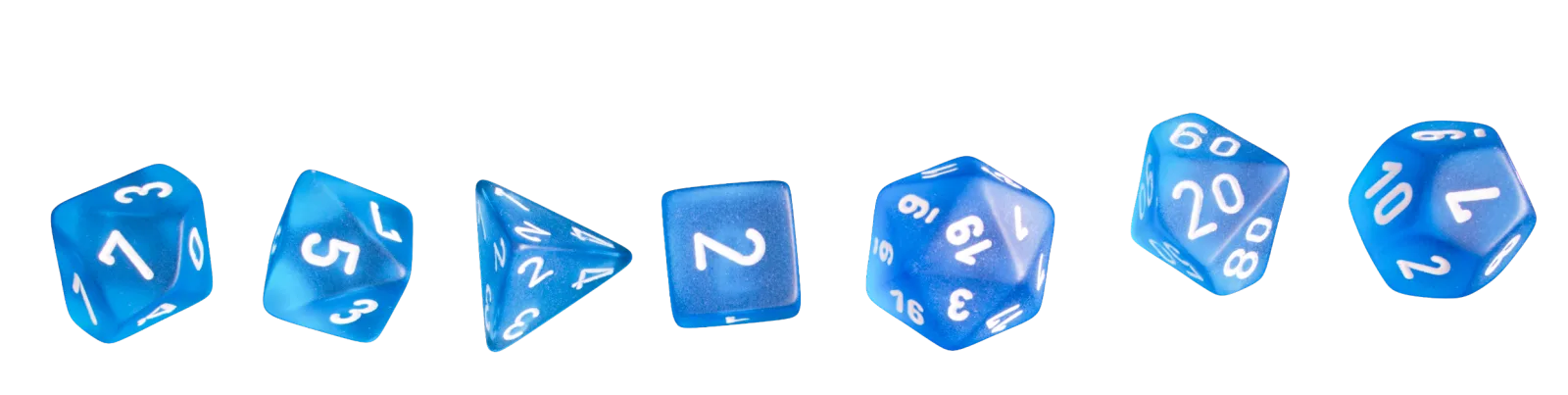
Randomness drawn from the physical world rather than a formula — every roll a genuine
collapse of possibility.
Choose your source
Four ways to make a number
Each source is real, and each one is selectable before you roll. The dice maths sits on
top of whichever you pick, using rejection sampling so the result stays unbiased.
On device · instant
Secure Enclave
Hardware randomness from the dedicated security chip built into your iPhone — the same
generator iOS trusts for cryptographic keys. It works entirely offline, returns
instantly, and is the default for every roll. It's also the safety net: whenever
another source is unreachable or its output fails a quality check, the roll falls back
here rather than failing.
Physical · optical
Lens QRNG
Photon shot-noise sampled through your camera sensor — genuine physical randomness
harvested from light itself, then whitened before use. Every capture is measured before
it's accepted: cover the lens and the noise fails its health check, the sample is
refused, and the roll falls back rather than passing off bad entropy. Frames are read
for noise and discarded — nothing is saved or transmitted.
Public · verifiable
NIST Beacon
A cryptographically signed randomness pulse published by the U.S. National Institute of
Standards and Technology. Each pulse is chained to the one before it, so the sequence
can't be quietly rewritten after the fact. Because the value is public, anyone can look
up the exact pulse your roll consumed and confirm the number wasn't chosen — the rarest
property a die can have.
Coming soon · cloud hardware
IBM Quantum Cloud
The deepest source: send a sampling circuit to a real superconducting quantum processor
on IBM Quantum Cloud and roll on what comes back — bits from genuine qubit measurement
rather than a simulation of one. Connect your own IBM Quantum credentials, and the roll
is tagged with the backend that ran it.
Provenance
Every roll carries a receipt
When the app rolls, it stamps the result with a SHA-256 hash of the exact bytes it
consumed, tagged with the source that produced them. Your history shows what actually
happened, roll by roll.
That honesty matters most when something goes wrong. If a source is unreachable or its
entropy fails a health check, the roll falls back to the Secure Enclave — and says so.
A roll that reads "Lens QRNG unavailable — rolled on Secure Enclave" is telling
you the truth rather than dressing up a substitute.
Privacy
Nothing to collect
No accounts, no analytics, no ads, no third-party trackers. Your roll history stays on
your device. The app has no server of its own.